The rating
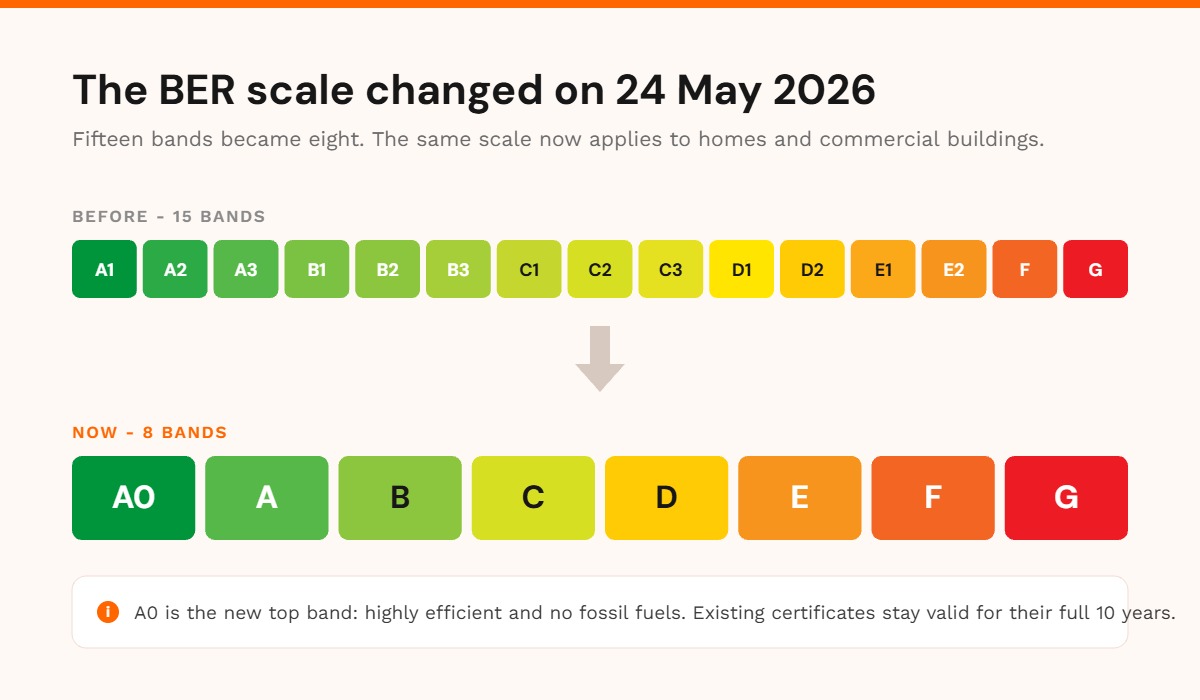
A BER rates a property from A0, the most efficient, down to G. Since 24 May 2026 the BER rating scale runs across eight bands instead of fifteen, and the same scale now applies to homes and commercial buildings. The rating reflects the building’s energy performance under standard assumptions about how it is occupied and heated, not the habits of the people living in it. Two identical houses receive the same rating, so buyers and tenants can compare like with like.
What you receive
Every completed assessment produces the same three things.
In plain English
Only an assessor registered with SEAI for the relevant category, and you can check any assessor on the register. Homes are assessed by a registered domestic assessor; non-domestic buildings need a separate registration. An assessment by anyone else cannot be published on the register.
The Dwelling Energy Assessment Procedure, SEAI’s official calculation method for homes. The assessor enters measured dimensions, construction, heating, controls and ventilation, and DEAP produces the rating. Assessors do not decide your rating, the software does.
Floor areas and dimensions, the construction of walls, roof and floors, window and door types, the heating system and its controls, hot water storage, ventilation, and any renewables such as solar panels or a heat pump.
No. The calculation uses standard occupancy and heating patterns so ratings stay comparable between properties. Turning the heating down will not improve your BER, and leaving it on will not damage it.
No. A BER assesses energy performance only. It is not a structural survey, a condition report or a valuation, and it says nothing about damp, subsidence or state of repair.
Next: Do you actually need one? · How to get one · What it costs