Applying for the SEAI heat pump grant? Your home has to pass a Technical Assessment first — and it has to be carried out by an SEAI-registered Technical Advisor before any work starts.
The assessment measures your home’s Heat Loss Indicator (HLI). To qualify for the grant, that figure has to come in at 2.3 W/(K.m²) or below. It applies to homes built before 2007, unless you already hold a valid BER showing the heat loss is low enough.
Tom Murray is an SEAI-registered Technical Advisor working across Cork city and county. Site survey, HLI calculation, signed Technical Assessment Form — plus a clear list of the upgrades needed if your home doesn’t pass first time.
A Technical Assessment is a survey of how much heat your home loses through its walls, roof, floors, windows and doors. That total, divided by your floor area, is the Heat Loss Indicator — the HLI.
A heat pump only runs efficiently in a home that holds its heat. That is why SEAI will not pay the grant until an assessment shows your HLI is 2.3 W/(K.m²) or below.
It is not a pass-or-fail dead end. If your home comes in above the threshold, the report sets out which upgrades would bring it under, what each is likely to cost, and the HLI you should expect afterwards.
You need one if:
Your home was built before 2007 and you are applying for the heat pump grant
Your existing BER is out of date or does not reflect work done since
You have renovated or extended and the old rating no longer stands
You want to know whether your home suits a heat pump before committing to a system
Homes built from 2007 onward do not always need one — a valid BER showing acceptable heat loss can be enough. Send us the address and we will tell you which applies.
Heat Pump Assessments in Cork: What You Need to Know
Who needs an assessment, what happens on the day, and what to do if your home does not pass first time. Most of it comes down to one number and the paperwork behind it, get both right and the grant application is straightforward rather than a delay on your install.
Do you need one?
You need a Technical Assessment if you are applying for the SEAI heat pump grant and your home was built before 2007.
Built before 2007 — assessment required, unless a valid BER already shows acceptable heat loss
Built 2007 onward — usually not required, but the property must have been built and occupied before 2021 to qualify for the grant at all
Renovated or extended since your last BER — the old rating will not reflect the work
Unsure whether your home suits a heat pump — worth knowing before you commit
The assessment has to be done before the work starts. SEAI will not pay for it retrospectively.
How it works
Quote — Send us the address, the year the house was built and rough floor area. We come back the same day.
Survey — We measure the house and record construction, insulation, heating, ventilation and glazing. Non-intrusive, but have any proof of past insulation work to hand.
Report — You get your HLI figure, a signed Technical Assessment Form, and where needed a costed list of the upgrades that would bring you under the threshold.
Without documentation for insulation already done, the software has to assume the worst — which is the single most common reason a home scores worse than the owner expects.
The 2.3 HLI threshold
The Heat Loss Indicator is your home’s total heat loss divided by its floor area, measured in W/(K.m²).
2.3 or below — your home qualifies for the heat pump grant
Above 2.3 — fabric upgrades are needed first, and the report tells you which
Some assessors and articles still quote an older 2.0 figure. 2.3 is the current SEAI threshold
Well-insulated 1990s and 2000s houses often pass as they stand; solid-wall and pre-1980 stock usually needs work
If your home does not pass
Coming in above 2.3 is not the end of it. Most homes that fail need one or two fabric measures, not a full retrofit.
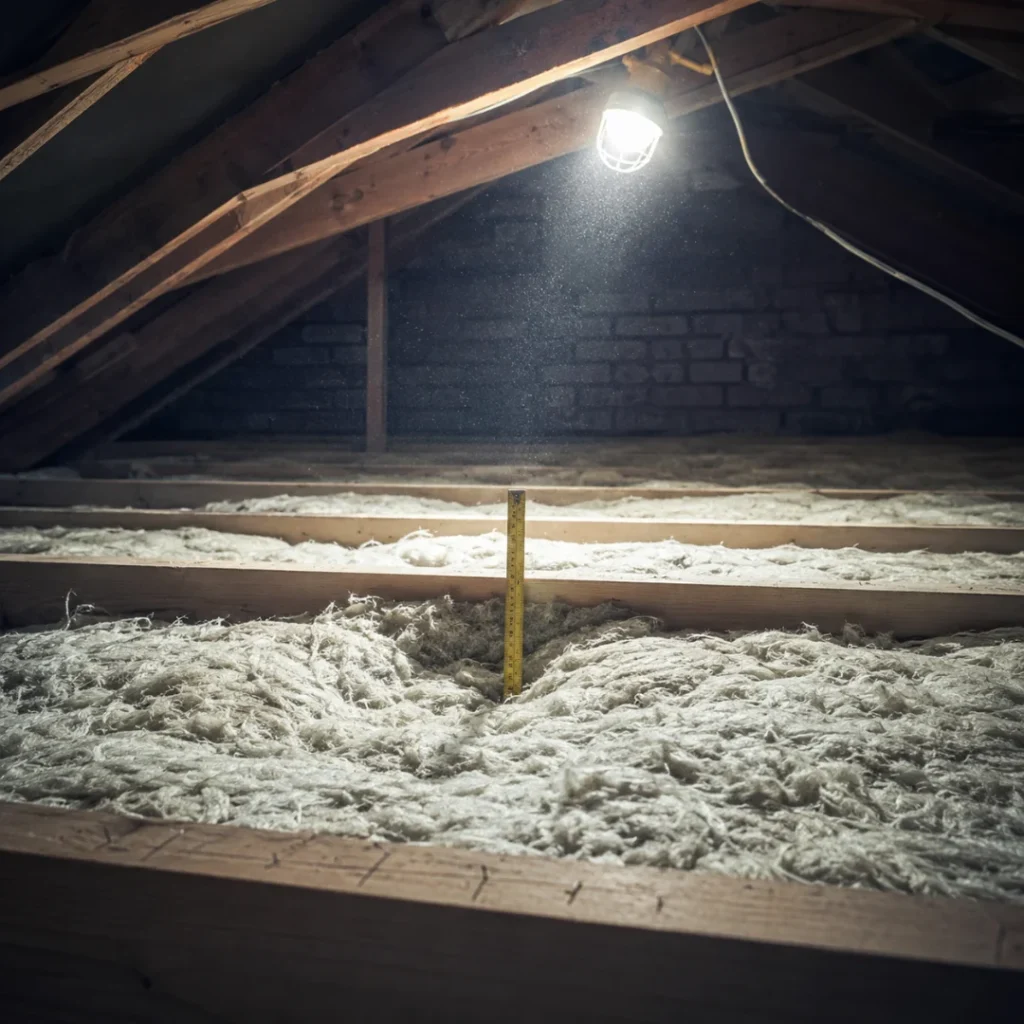
Attic and wall insulation are usually the biggest single moves
Airtightness and ventilation work often close the remaining gap
The report gives your expected HLI after the proposed upgrades, so you know it clears the threshold before you spend
Those upgrades carry their own SEAI grants and can be done alongside the heat pump works
Grants and paperwork
SEAI supports the assessment itself, not just the heat pump.
€200 towards the Technical Assessment when you go on to claim the heat pump grant
€50 towards the BER that must be published after the works are done
The heat pump grant rose to up to €12,500 for houses in February 2026, and €9,500 for apartments
Your property must have been built and occupied before 2021
We look after the assessment and the post-works BER. Your installer looks after the heat pump and the grant application itself.
Murray BER & Tom provided an excellent service. Tom was very efficient, gave great guidance on what paperwork was needed, did a thorough & detailed inspection..and completed the assessment in good time with great humour too! I’d highly recommend!
Thomas did an excellent job with the BER assessment for my new house. The process was smooth, professional and very well organised from start to finish.
He was very knowledgeable, explained everything clearly and helped ensure all the correct information was included in the report. The BER was completed quickly and the documentation was very thorough.
Highly recommended if you need a BER assessor in Cork.
Tom was an absolute pleasure to deal with! He provided my mother and I with a ber rating, He is very easy to deal with and worked around my schedule. I would highly recommend to anyone going forward.
I highly recommend Tom Murray as a BER Assessor. The whole process was smooth and very professional. Tom was extremely efficient, punctual, and explained everything clearly. You can see he has a lot of experience and takes his work seriously. I’m very satisfied with the service and would definitely recommend him to others.
Excellent service.. very thorough and professional. Would highly recommend
Response from the owner
12 months ago
Thanks for the great feedback! We’re glad you found our service thorough and professional. Murray BER provides BER assessments and certificates in Cork with quick turnaround and straightforward advice on improving home energy ratings. Thanks again for recommending us.
I'm an external wall insulation contractor and I recommend Tom Murray to all my clients. I always get positive feedback from whoever uses his service. Great service and he knows his stuff.
Response from the owner
12 months ago
Thanks a million for your ongoing referrals much appreciated. Coordinating pre- and post-works BER assessments helps your clients maximise results from external wall insulation. Tom takes pride in clear communication, accurate ratings, and fast certificates across Cork City & County. Delighted your clients are getting great outcomes.
I had an excellent experience with this BER assessor company. The assessor was punctual, professional, and extremely knowledgeable. Everything was explained clearly, and the whole process was efficient from start to finish. The report was delivered quickly and in great detail, giving me full confidence in the results. I’d highly recommend this company to anyone looking for a reliable and trustworthy BER assessment service, as Mr Thomas Murray was a pleasure.
Response from the owner
12 months ago
Thank you for the detailed review! We’re thrilled you found the process punctual, professional, and clearly explained, and that the BER report arrived quickly with the detail you needed. Thomas and the team strive to make BER assessments in Cork straightforward and trustworthy from start to finish. If you ever need an updated BER certificate after upgrades, we’re here to help.
Excellent service. I am very happy to recommend Murray Ber accessors. Very reliable.
Response from the owner
12 months ago
Really appreciate your recommendation! We’re glad you found our team reliable and the service excellent. Murray BER delivers BER certificates in Cork with quick turnaround and practical advice for homeowners and landlords across Cork City & County. Thank you for trusting us.
Very professional and very efficient service and very easy to deal with i would highly recommend this company
Response from the owner
12 months ago
Thanks so much for the kind words! We’re delighted you found our service professional, efficient, and easy to deal with. At Murray BER, we provide fast, reliable BER assessments in Cork City & County with clear guidance on improving your home energy rating. Thanks for recommending us!
FAQ's
Frequently Asked Questions About Heat Pump Assessments in Cork
If your home was built before 2007, yes — unless you already hold a valid BER showing the heat loss is low enough. It has to be done before the work starts.
The report lists the upgrades that would bring you under the threshold, with costs and the HLI you should expect afterwards. Most homes need one or two fabric measures, not a full retrofit.
No. A BER rates energy performance A to G. The Technical Assessment uses the same survey to answer a different question: is the heat loss low enough for a heat pump to work well. A BER is usually published as part of it. If you only need a rating, see our BER assessments in Cork City.
The survey itself takes a couple of hours for a typical house, and the report follows shortly after. Working to an installer’s start date? Tell us and we will prioritise it.
Someone needs to give access to the whole house, including the attic and any plant or meter locations, along with documentation for insulation work already carried out.
QUICK INQUIRY
Get Your Heat Pump Assessment in Cork
Ready to book your Heat Pump Assessment in Cork? Call Tom on 087 395 6007 today. Tell us the address, the year the house was built and rough floor area, and we’ll come back with a quote and a date.