The scale at a glance
A BER rates a building on one letter scale. A0 is the most efficient, G is the least. The letter comes from the energy the building is calculated to need per square metre each year, under standard conditions, so any two properties can be compared like for like.
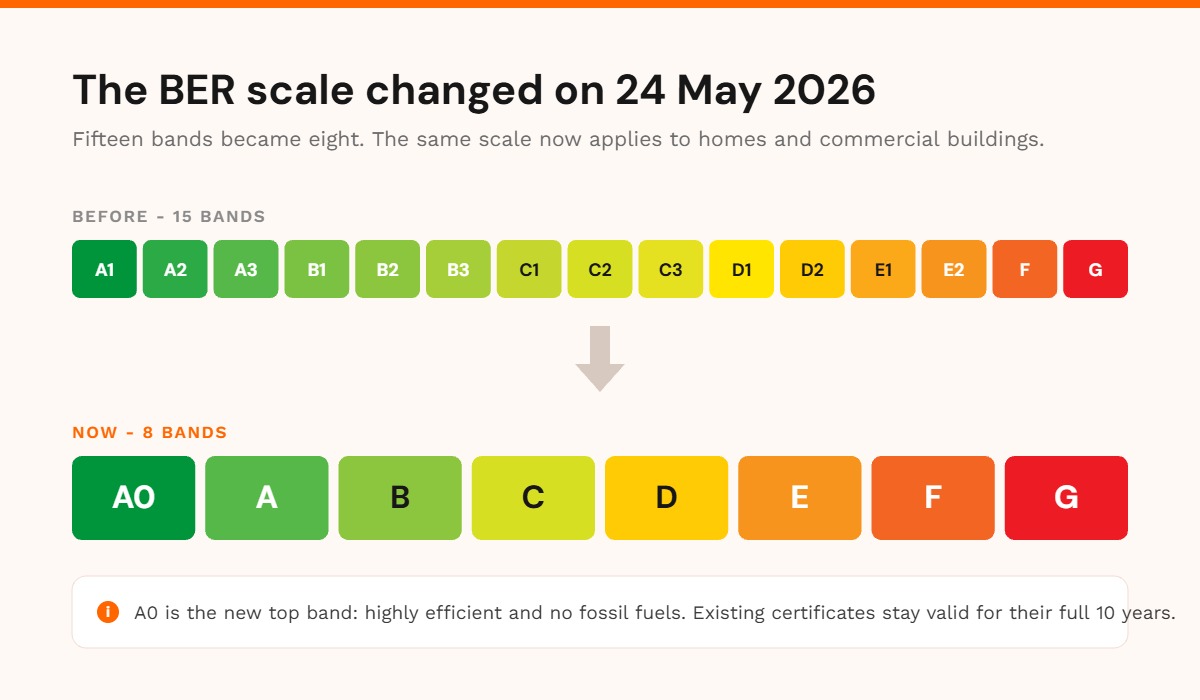
Since 24 May 2026 the scale has eight bands: A0, A, B, C, D, E, F and G. The old sub-bands such as A2, B3 and C1 are gone, and the same scale now applies to homes and to commercial buildings.
24 May 2026
The change came in under new regulations implementing the EU Energy Performance of Buildings Directive, so Irish ratings line up with energy certificates across the EU.
The old scale ran A1, A2, A3, B1, B2, B3, C1, C2, C3, D1, D2, E1, E2, F and G. The sub-bands have been removed, leaving one letter per band.
A0 is reserved for the most energy-efficient buildings that do not use fossil fuels. In practice that usually means very high insulation, a heat pump for heating and hot water, and on-site renewables.
The simplified scale applies to domestic and non-domestic buildings alike, from houses and apartments to offices, shops and schools.
New certificates add energy use, the renewable energy contribution, the building's lifecycle carbon measured as Global Warming Potential, and a QR code linking to upgrade advice for that property.
You still need a valid BER to sell or rent, and existing certificates stay valid for ten years from the date they were issued. See when you need a BER.
Your existing BER
Nothing, until you choose to get a new assessment.
Reading your rating
It depends on what you need the certificate for. Here is how the bands tend to matter in practice.
Want to know what the letter means in more detail? Read what a BER certificate is, or check any property's rating on the national register. Buying? See what BER you need for a green mortgage.